
Adding Anchor Links
Anchor links allow recipients to navigate to specific sections of a message. They simplify navigation and are especially useful in long messages.
For example, you can add anchor links to a menu so recipients can quickly jump to specific product categories within the message.

ImportantSome email clients do not support anchor links or render them inconsistently, including:
- Gmail (iOS)
- Apple Mail (iOS)
- Outlook.com (Web)
- Outlook (Android)
- Outlook (MacOS)
Before you begin, open your message in the drag-and-drop email editor. You can add anchor links in two ways:
- At the element level (via element settings);
- At the HTML level (by editing the message code)
Adding an Anchor Link via Element Settings
Step 1. Create an anchor
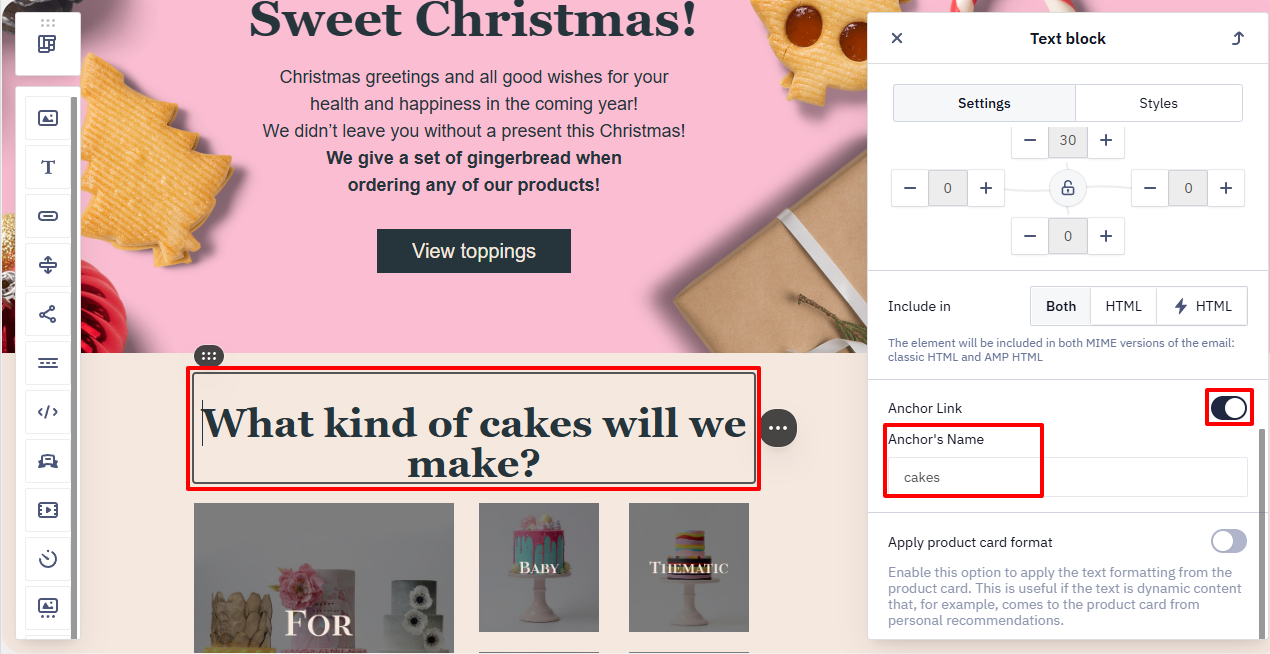
- Select the element you want recipients to navigate to.
- In the element settings, enable Anchor Link.
- Specify the anchor name (for example, cakes).
Step 2. Add a link to the anchor
- Select the element from which the navigation should occur.
- In the Link field, enter the anchor name with the hash symbol (for example,
#cakes).
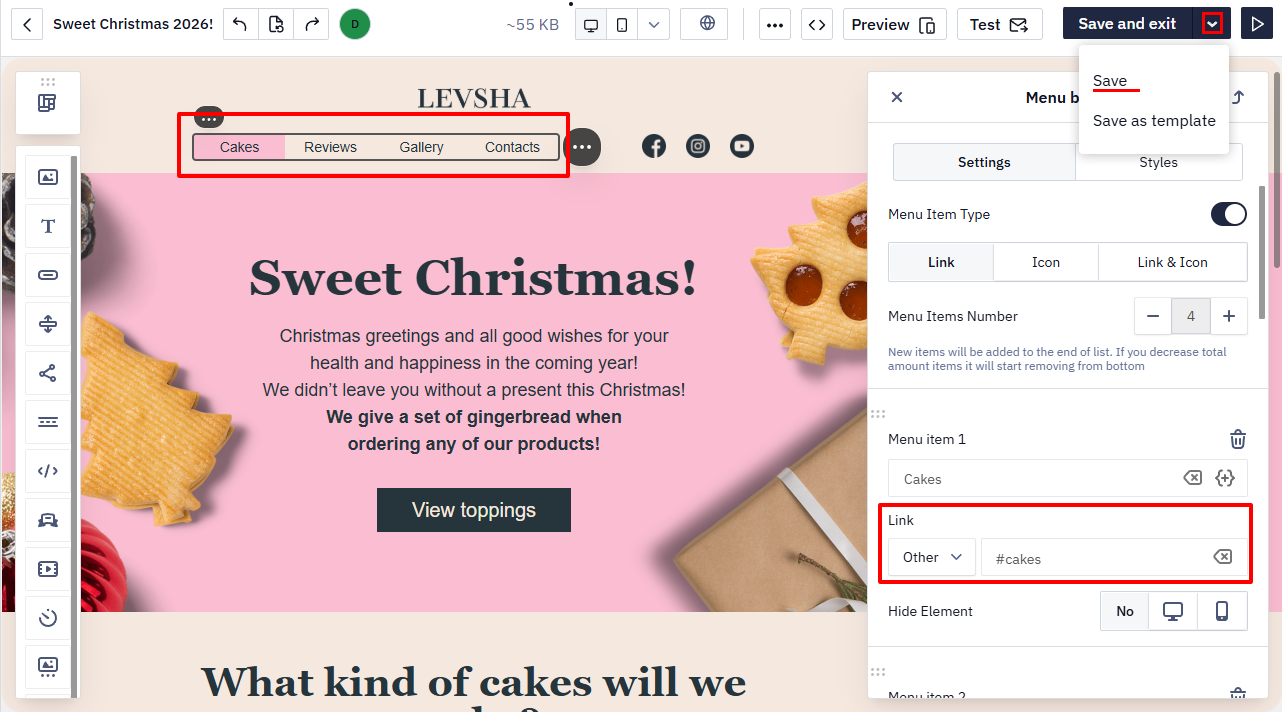
- Click Save.
Adding an Anchor Link via HTML Code
Step 1. Add the link
- Open the code editor.
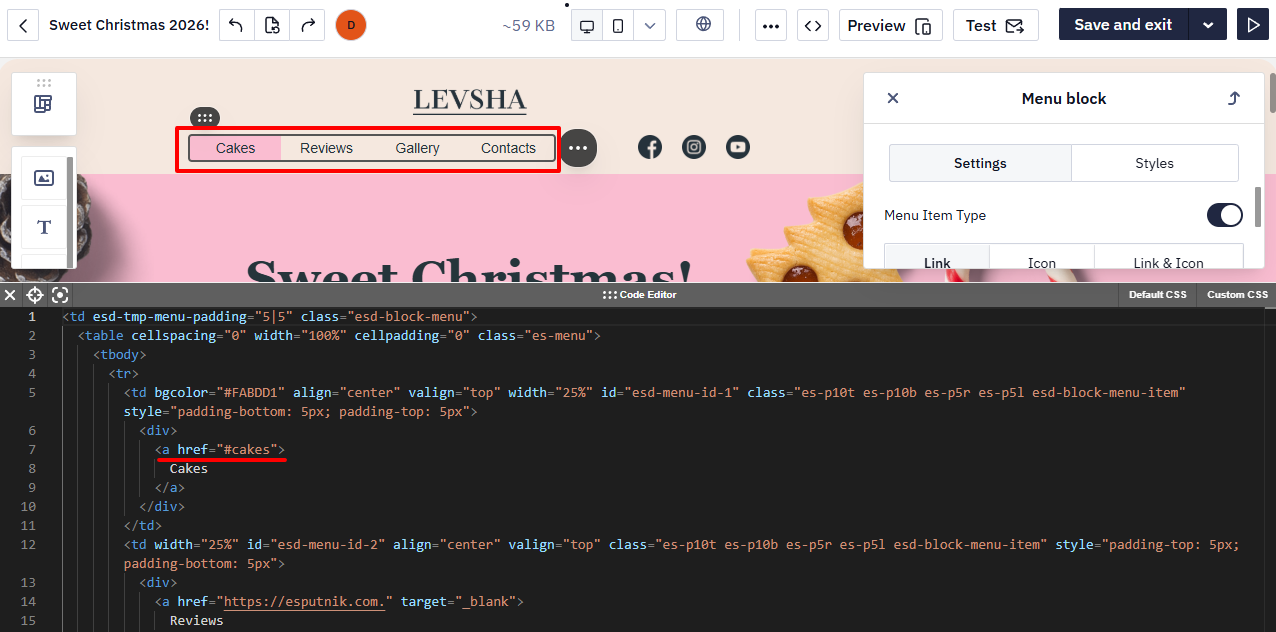
- Select the element from which the navigation should occur.
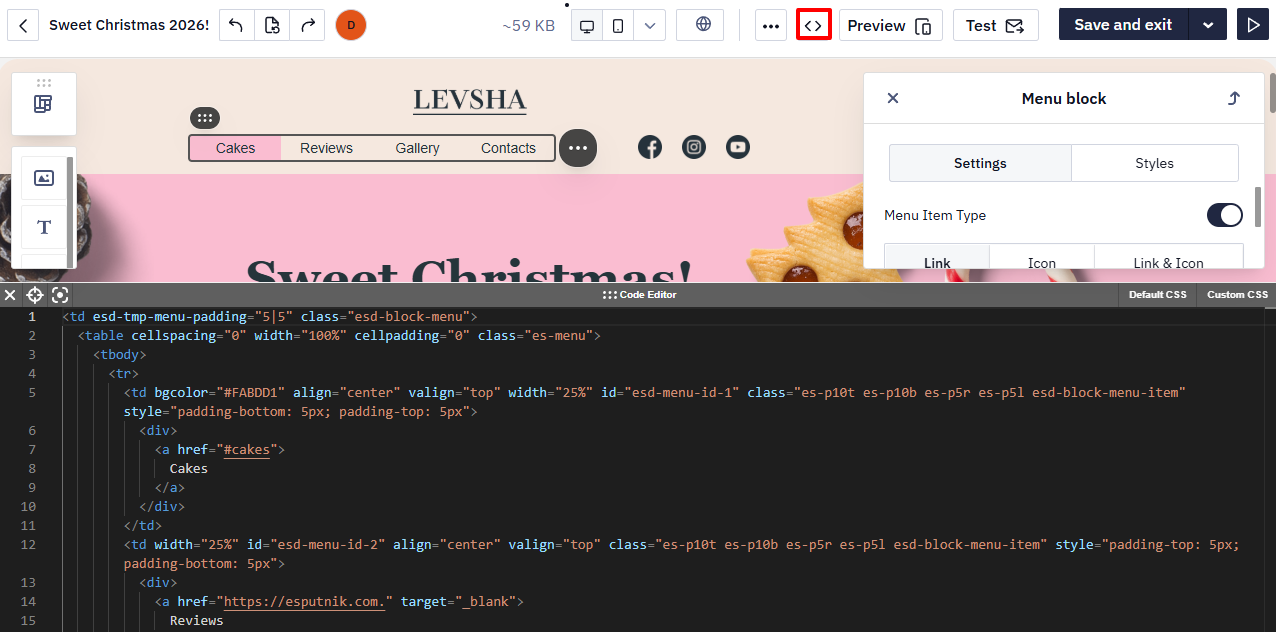
- Add a link tag with the href attribute:
<a href="#cakes">.
Step 2. Add the anchor
- Select the element you want recipients to navigate to.
- Add the anchor before the element:
<a name="cakes" class="esd-anchor"></a>.
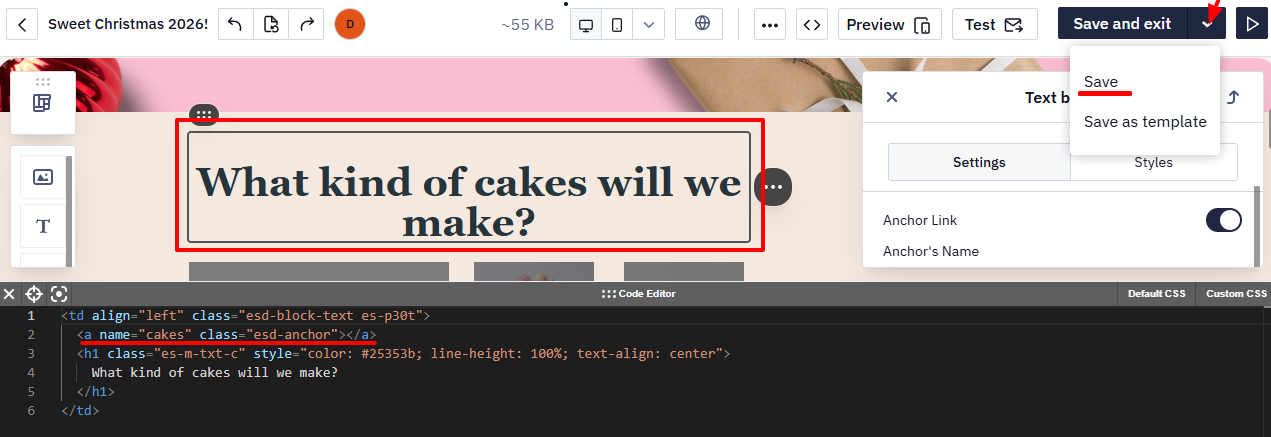
- Click Save.
Testing Anchor Links
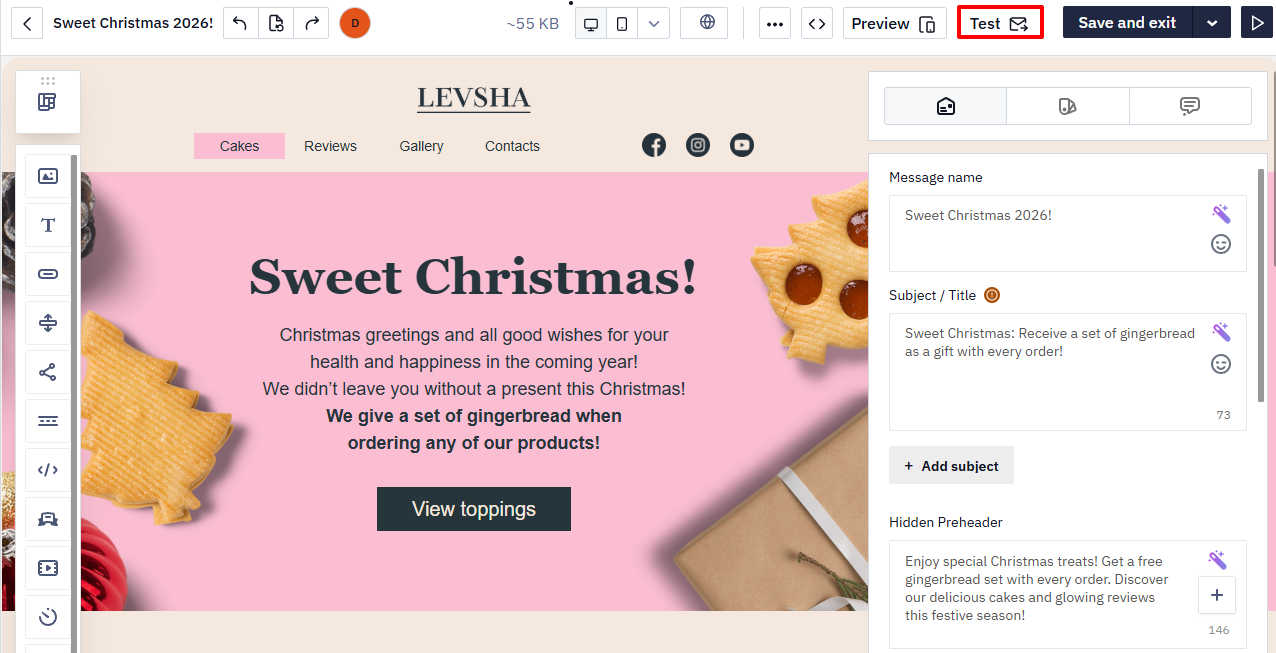
To verify that anchor links work correctly, send a test message to your own email address and test the added anchor links in supported email clients.
Updated 3 months ago
Did this page help you?