
Adding/Changing/Deleting a Sender Name
Senders help recipients understand the message context. Use different sender names for different email types, such as promotional campaigns, trigger messages, or emails from managers.
NoteBefore you configure senders, make sure your domain has valid domain authentication (SPF, DKIM, and DMARC records that authenticate your sending domain).
You can add or change a sender in a few ways.
An email template is saved only when a sender is selected in it. If the editor refuses to save the message, check the Sender field first.
If the sender you need hasn't been added or confirmed yet, select any available sender, save the template, and switch to the correct sender afterwards. The sender is stored with the message, so changing it later doesn't affect the content.
Add a Sender in the Email Editor
Static Sender Address
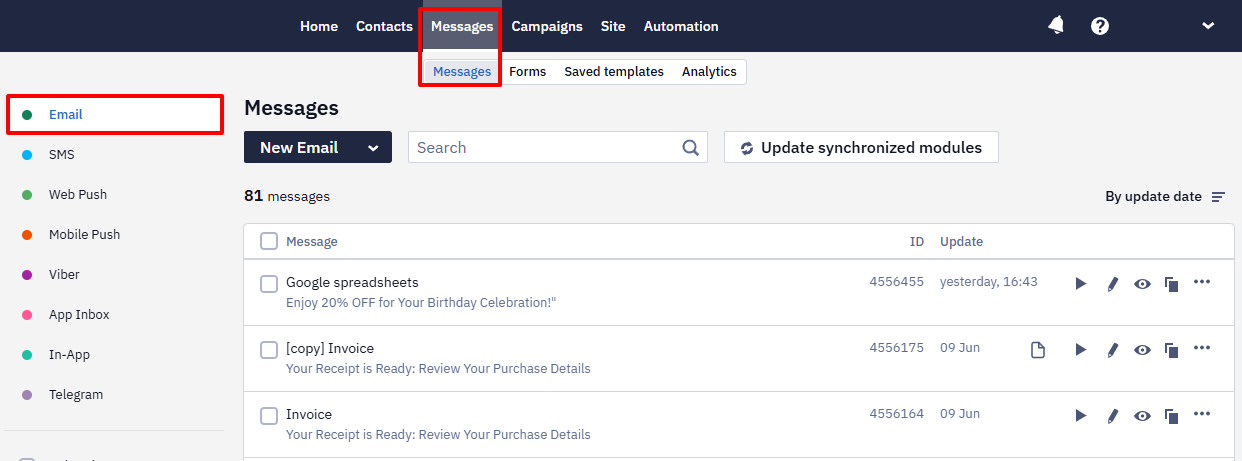
- Go to Messages → Messages → Email and open an existing email or create a new one.
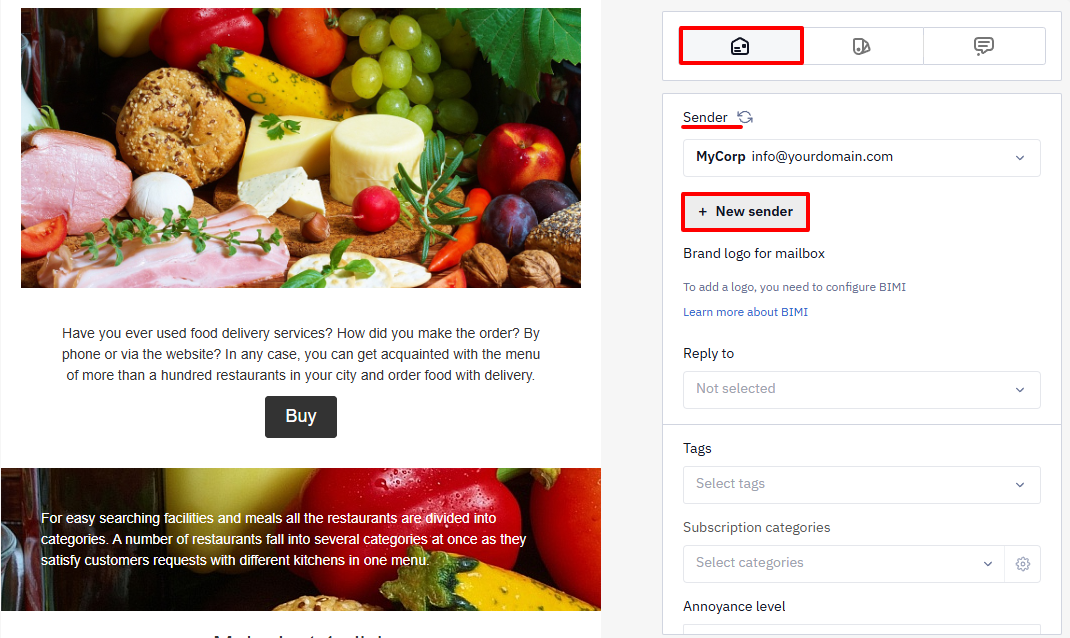
- In the Message settings panel, open the Sender section and click + New sender.
- Enter the sender name and email address and click Add.
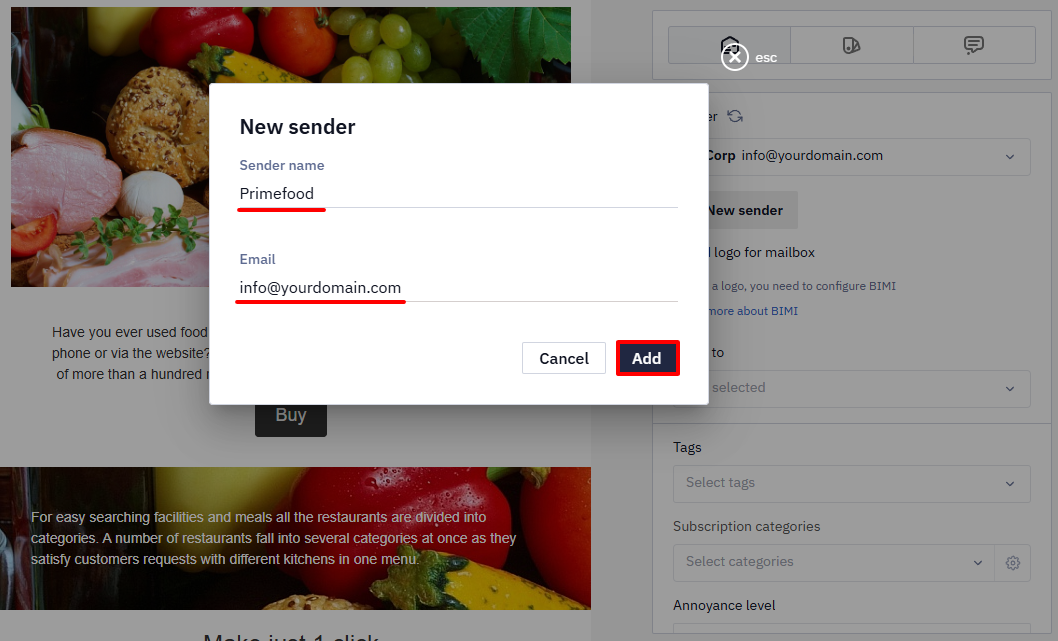
ImportantThe sender email address must belong to your corporate domain. Example
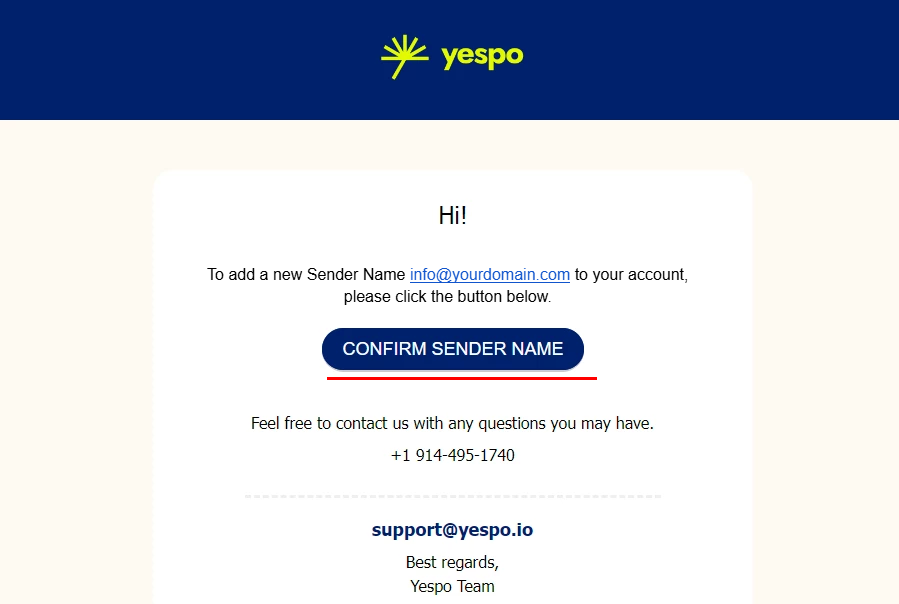
After you add the sender, Yespo sends a confirmation email to the specified address.
- Open the message from Yespo Support and confirm the sender.
Change the sender in an email
To use a different sender in the same email:
- Click the current sender name.
- Select another sender from the list.
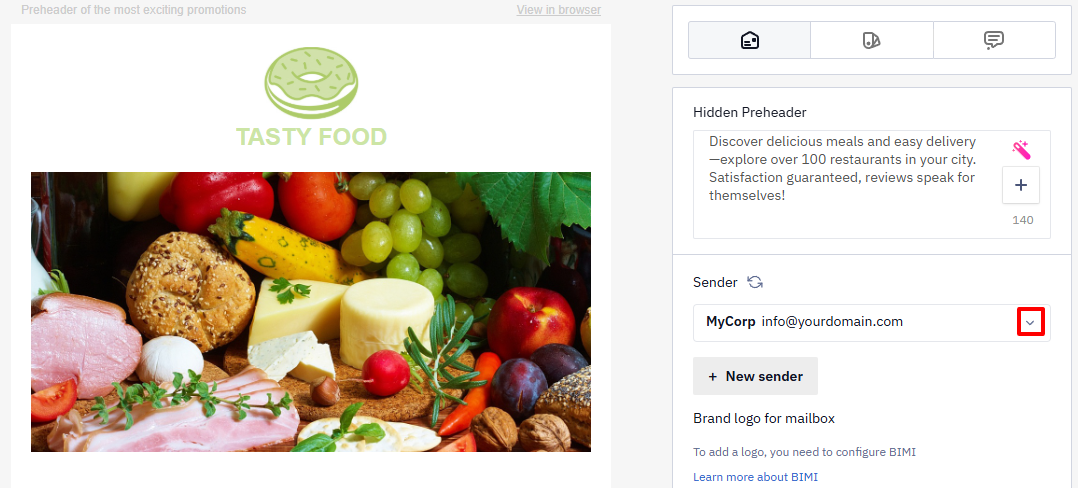
NoteIf you have several verified sending domains, you can use a different one for each email inside the same workflow — the domain is chosen per message, based on the sender you select in the email editor.
Dynamic Sender Address
NoteTo enable dynamic senders, contact the support team
Use a dynamic sender when each contact should see a different sender. This is common in broadcasts or messages sent on behalf of a personal manager.
For trigger messages in workflows, you can populate the sender from:
- event parameters;
- contact fields.
Configure a dynamic sender
- In the email editor, click the Sender field and open the Dynamic address tab.
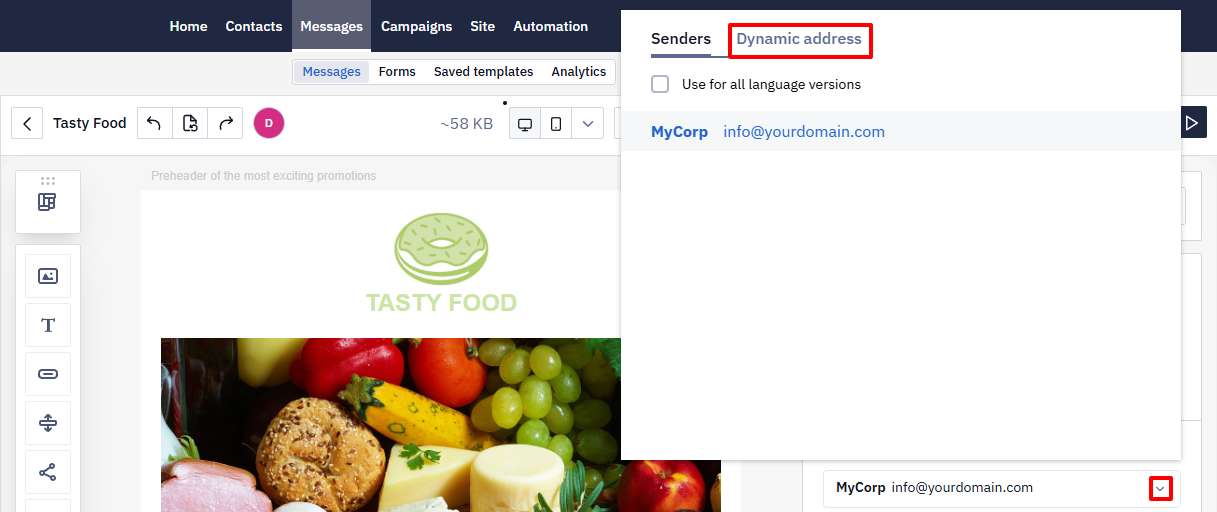
- Insert a variable from the event parameters.
Example:
$!yoursender_addressWhere yoursender_address is an event parameter.
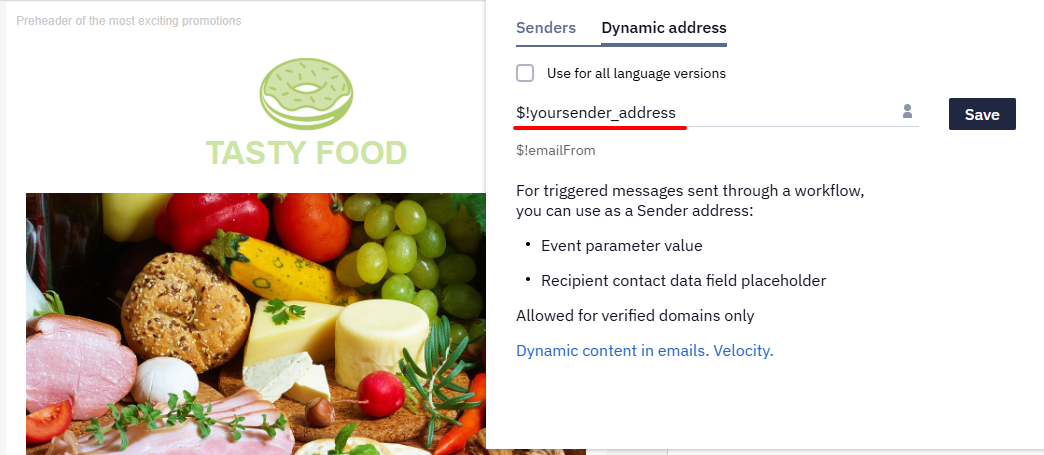
Or:
- Click the Personalization icon and select a field from the contact card.
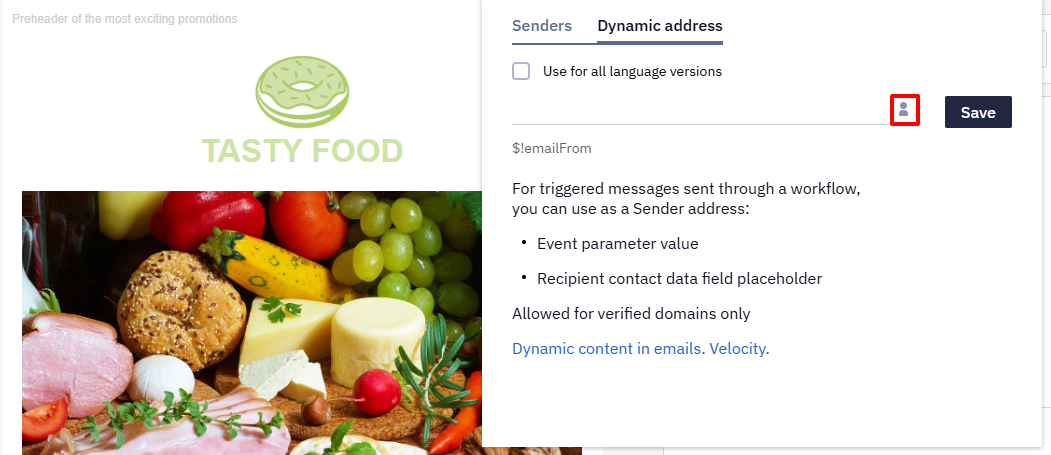
- Click Save.
Add a Sender Via Account Settings
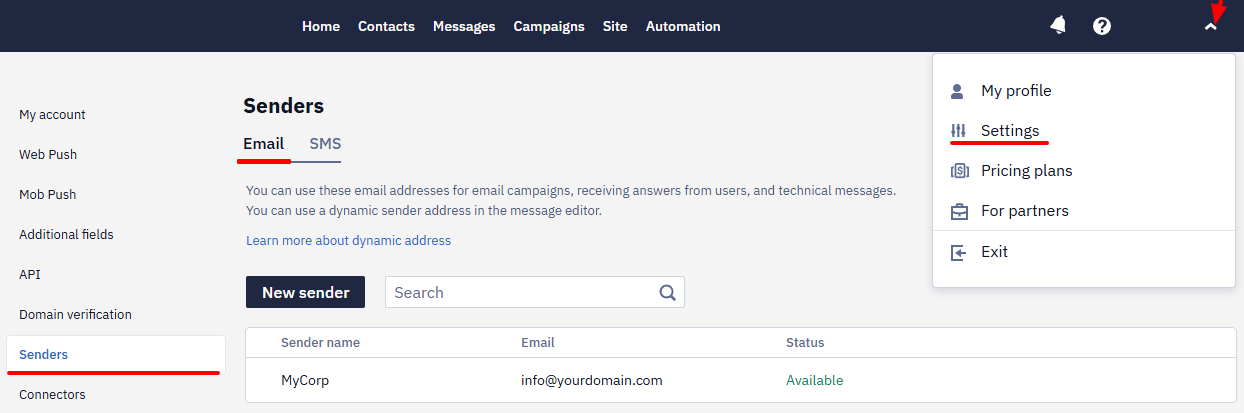
- Go to Settings → Senders → Email and click New sender.
- Enter the sender name and email address.
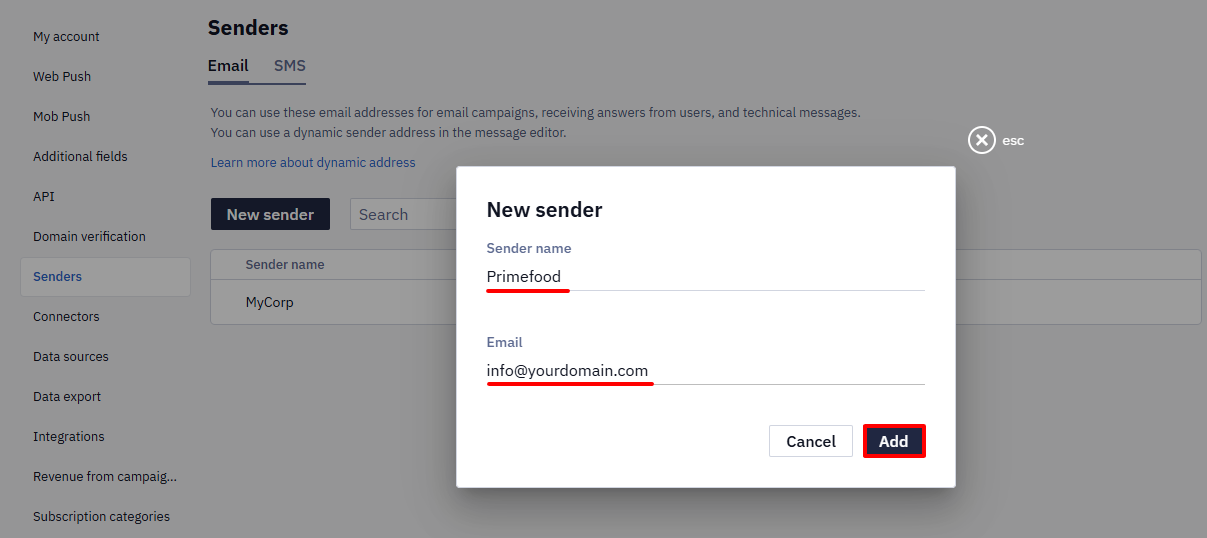
- Click Add.
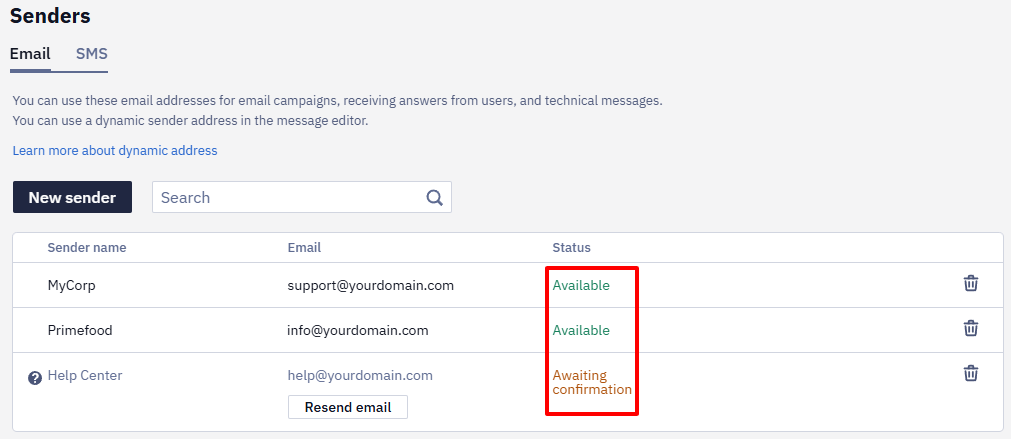
Yespo sends a confirmation email to the specified address. Confirm the address via the email from Yespo Support.
After confirmation, the sender's status changes to Available. Before confirmation, the status is Awaiting confirmation. You can resend the confirmation email if needed.
The same sending domain can be connected in several accounts — a production and a test one, for example. The DNS configuration has to match in both, including the subdomain.
Add a Reply-to Address
By default, replies are sent to the sender email address. To receive replies at a different address, add a reply-to address.
Example: [email protected]
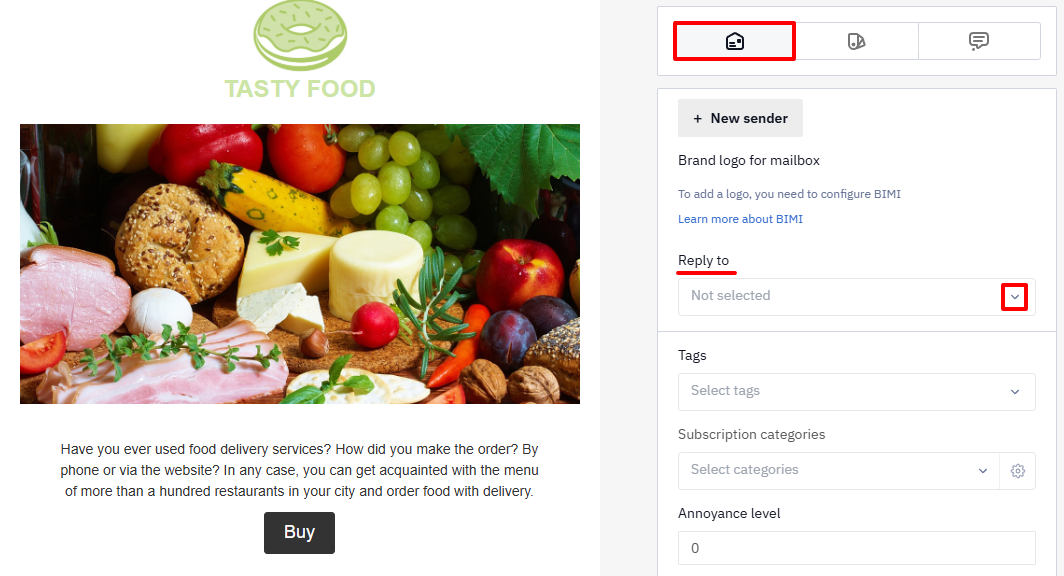
The setup flow matches the sender configuration in the email editor.
The reply-to addressIt must belong to your corporate domain.
BCC (Blind Carbon Copy) isn't supported for email sends. To deliver a copy of a message to another address, add a separate Email block to the workflow: in its advanced parameters, enter that address in the Email field and clear Contact ID. Reply-to doesn't send a copy — it only sets the address the recipient's reply goes to.
The address that receives the copies is an ordinary contact: it counts as one contact in your base. If you delete that contact or it unsubscribes, the copies stop arriving.
Yespo doesn't provide an auto-reply for inbound mail sent to your reply-to or sender mailbox — Yespo has no access to that inbox. Replies land directly in your own mailbox, and any auto-response has to be configured there, on your side.
Delete a Sender
- Go to Settings → Senders → Email.
- Click the Trash icon next to the sender.
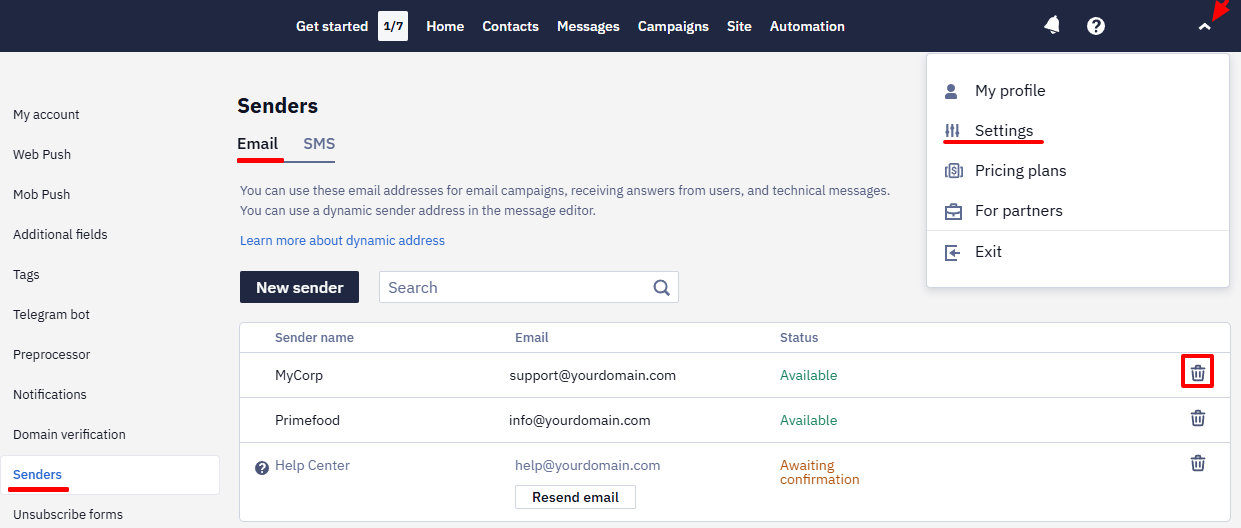
Deletion rules
- If the sender is not used in any messages, click Delete.
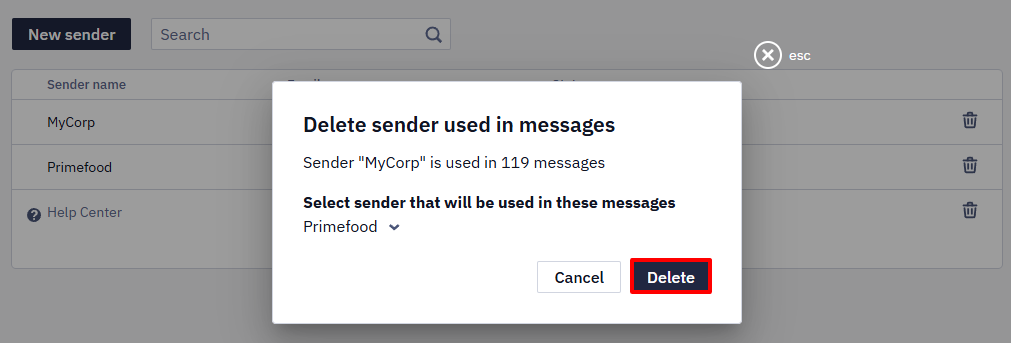
- If the sender is used, select a replacement sender or choose Leave without sender.
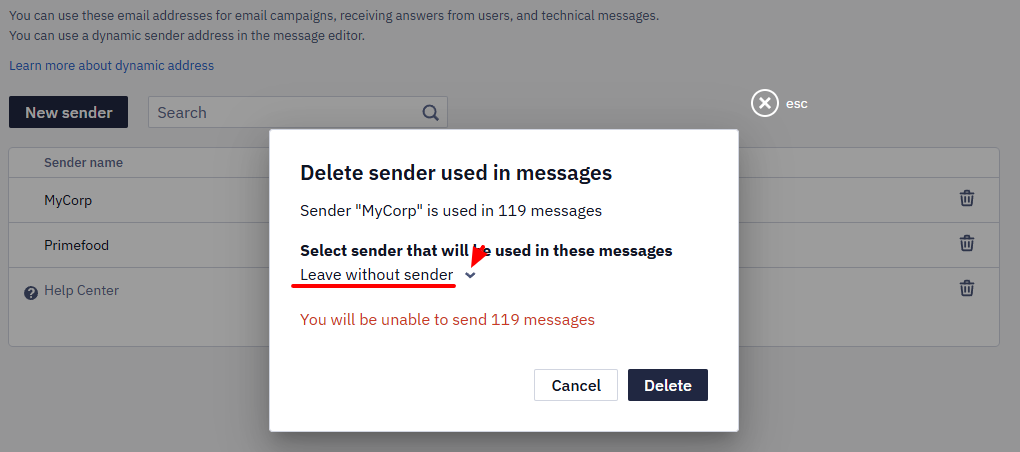
ImportantMessages without a sender do not send until you assign a new sender.
Troubleshooting
The Confirmation Email Doesn't Arrive
After you add a sender, Yespo sends a confirmation email from Yespo Support to that address. While the sender is unconfirmed, its status is Awaiting confirmation. If the email doesn't arrive:
- Check the Spam and Promotions folders of the sender mailbox.
- Make sure the address is spelled correctly and that the mailbox exists and can receive mail.
- Resend the confirmation: in Settings → Senders → Email, open the sender with the Awaiting confirmation status and resend.
- If it still doesn't arrive, the address may be on the blacklist — for example, it previously bounced or returned "account does not exist" — and Yespo can't deliver to a blacklisted address. Contact [email protected]; the team checks the address, removes it from the blacklist if it's valid, and then you can resend the confirmation. See Contact Blacklist.
The Email Template Won't Save Without a Sender
An email template isn't saved until a sender is specified in it. If the sender you need isn't in the account yet — for example, it is still awaiting confirmation — select any existing sender, save the template, and then change the sender to the correct one once it becomes available.
A New Sender Isn't Available for API Sending Right Away
Because of caching, a newly added sender can take up to an hour to become available for sending via the API. If a request — for example, to Send email message — returns the error interface '...' doesn't exist right after you add and confirm the sender, wait up to an hour and retry.
The Sender Address Is Not on Your Domain
The sender address — and the reply-to address — must belong to your corporate domain that is authenticated in Yespo. If you can't add or confirm a sender because of a domain error:
- Use an address on your authenticated domain or subdomain (for example,
[email protected]), not a public mailbox such as Gmail or Outlook. - Verify the exact domain or subdomain you send from. Verifying
yourcompany.comdoes not automatically coverpromo.yourcompany.com. - See Setting Up Email Domain Authentication and Domain Verification Troubleshooting.
The Sender Name Displays Differently in Gmail
Gmail and some other providers may show the sender name differently from how you configured it. If your authentication is correct, this is controlled by the mailbox provider, not by Yespo — Yespo can't force how the sender appears in a given inbox.
- First, rule out an authentication issue. Send a test to Mail-Tester. A high score (for example, 10/10) means SPF, DKIM, and DMARC are fine, and the display difference is on the provider's side.
- Make sure you set a sender name, not just an address, when adding the sender.
- The sender name can still affect open rate indirectly, so keep it clear, consistent, and recognizable — but how Gmail ultimately renders it is outside Yespo's control.
The sender name is passed in the message's From header exactly as it is set here. How the name appears in the inbox can differ between mail services and depends on several factors, so if a recipient sees the bare address, open the original of the received message and check its From header before looking for a problem in the account.
Updated 19 days ago