
Manage Translations
The Manage translations feature lets you work with language versions of email messages outside the editor.
You can work with translations using:
- local
xlsxandcsvfiles; - Google Sheets.
NoteThe Manage translations feature is available only if the message contains at least two language versions.
Export Texts for Translation
- Open the email message in the editor.
- On the Message management panel, click the language switcher.
- Select Manage translations.
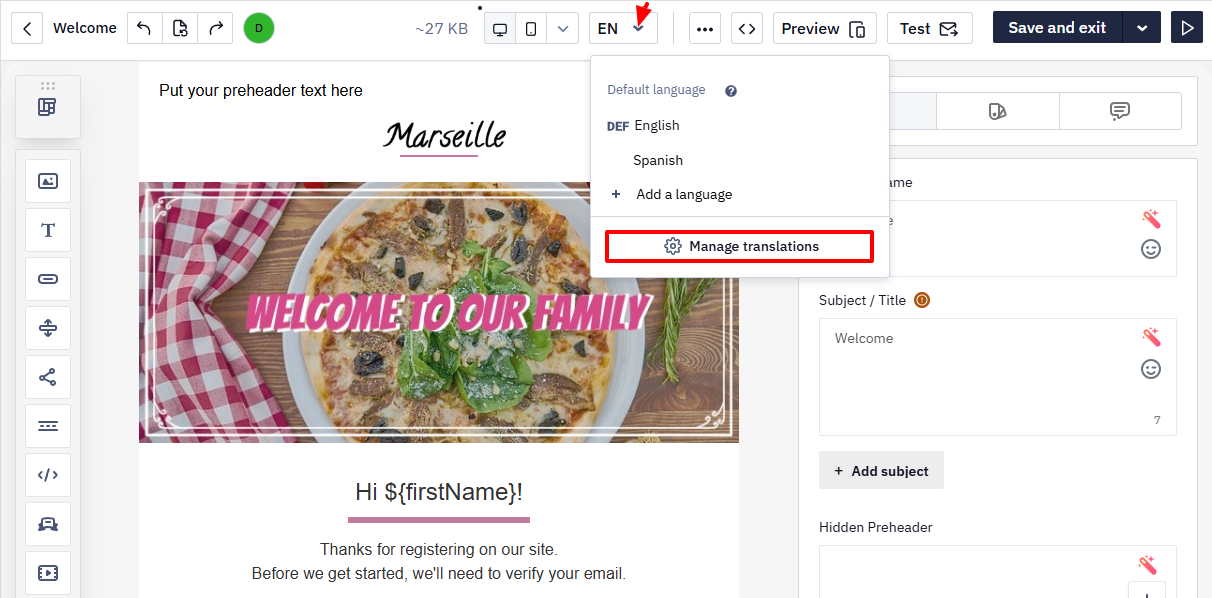
- Choose the export option.
Export to Google Sheets
- Click Export to Google Drive.
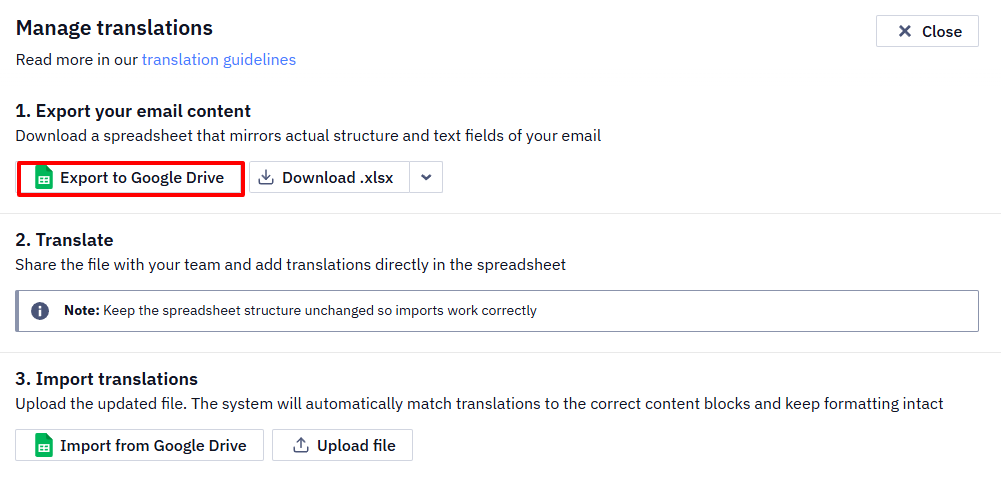
- Choose the export option:
- To an existing spreadsheet — updates translations in an existing Google Spreadsheet.
- To a new spreadsheet — creates a new Google Spreadsheet in Google Drive.
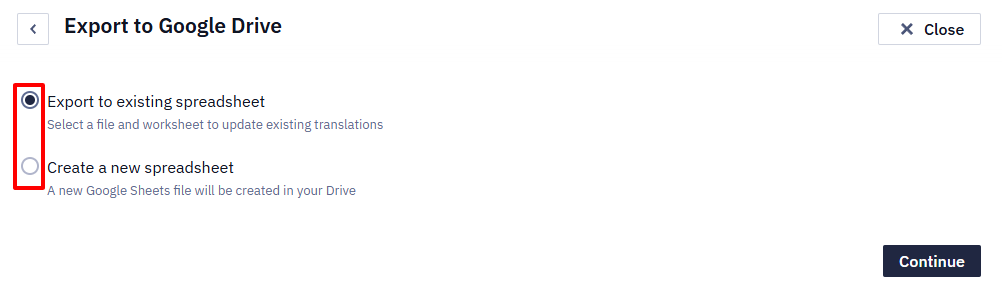
NoteWhen working with Google Drive for the first time, add a Google account and grant the required permissions.
- Select the account to connect to Google Drive.
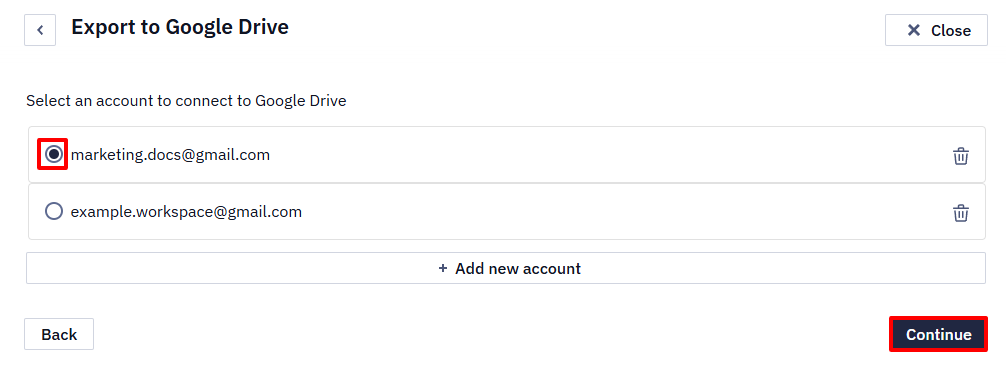
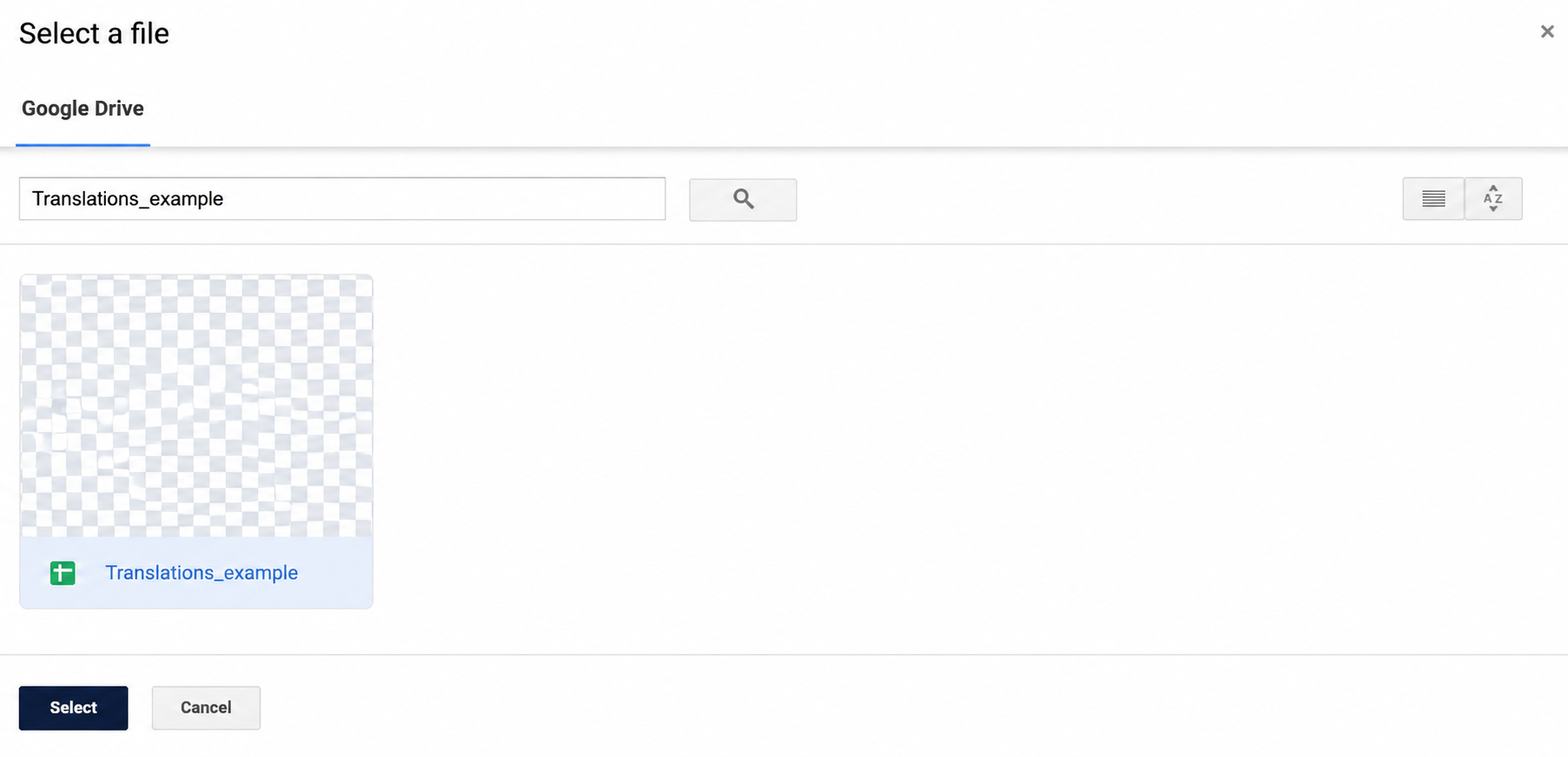
- Select a Google Spreadsheet.
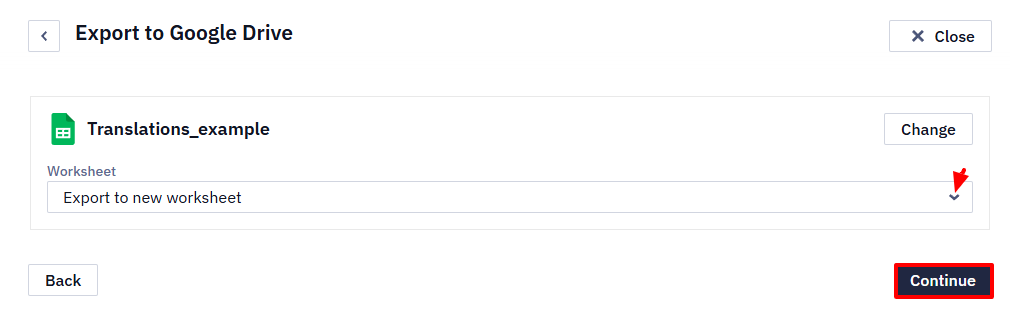
- If you export translations to an existing Google Spreadsheet, select the required sheet or create a new one.
Export to Computer
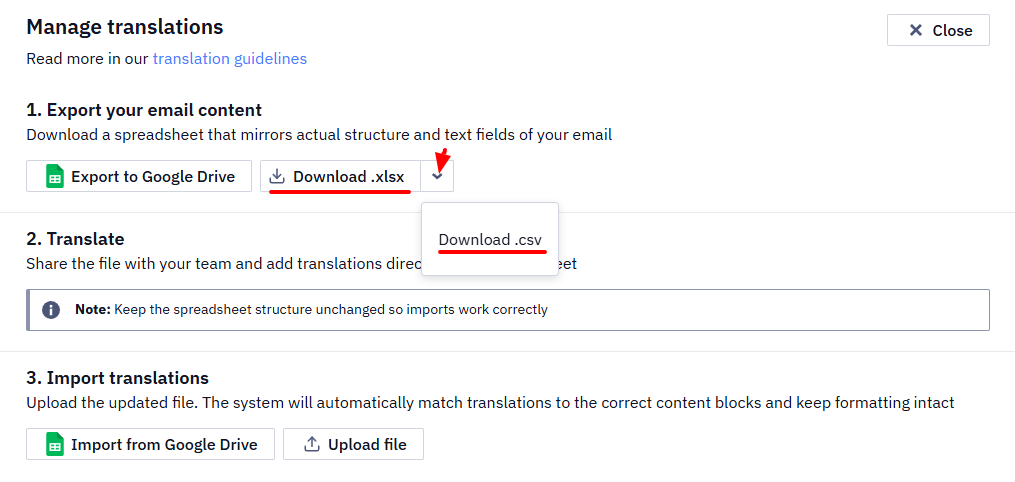
- Download the file in .xlsx or .csv format.
Edit Translations
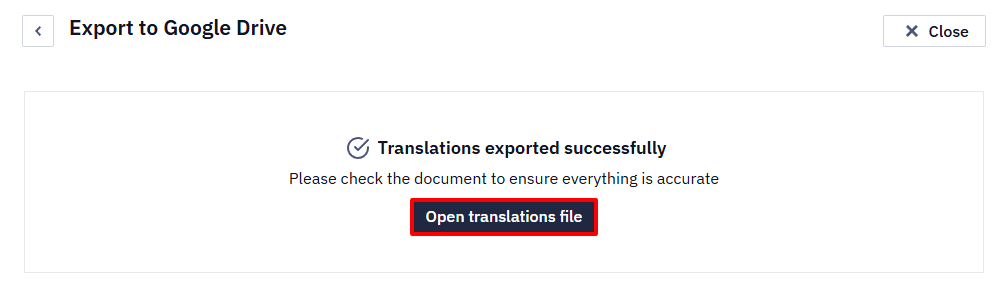
- Open translations file.
The translation file contains a sheet with the following columns:
- message_id – the message identifier in the system;
- key – a unique key of the text element;
- language — a separate column for each language version with translated texts.
NoteIf a translation is missing, the language column remains empty.
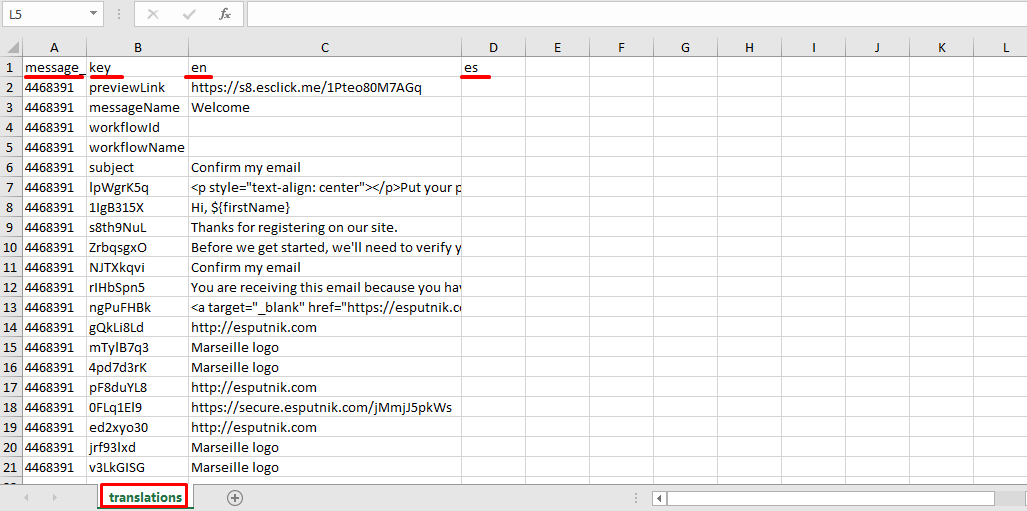
- Enter translations in the corresponding language columns.
ImportantTo ensure correct import, do not:
- change column names;
- delete or edit values in the message_id and key columns;
- modify service rows: previewLink, messageName, workflowId, workflowName;
- change the order of rows.
Import Translations
In the Manage translations window, choose the import option — from Google Sheets or from your computer.
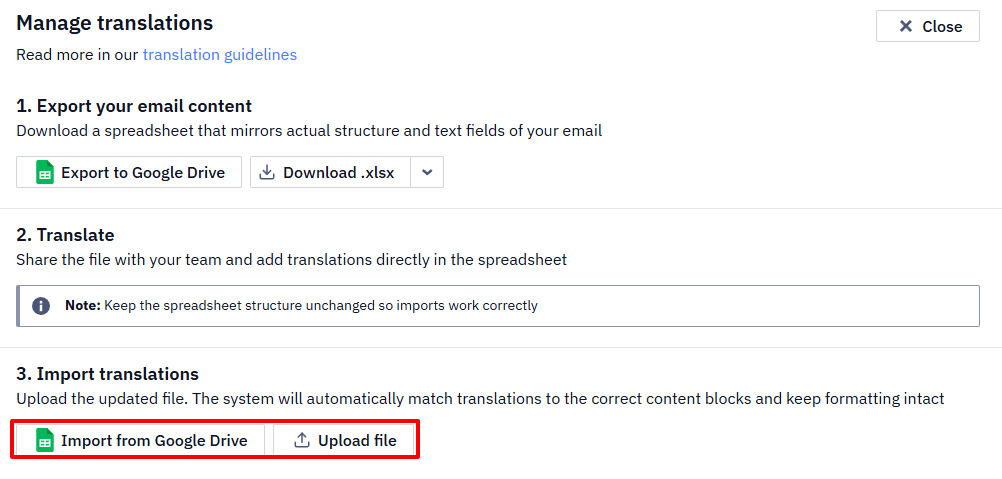
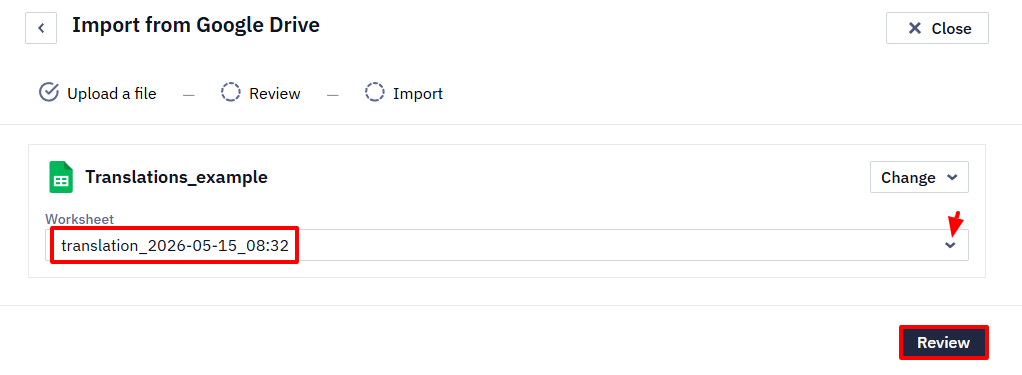
Import from Google Sheets
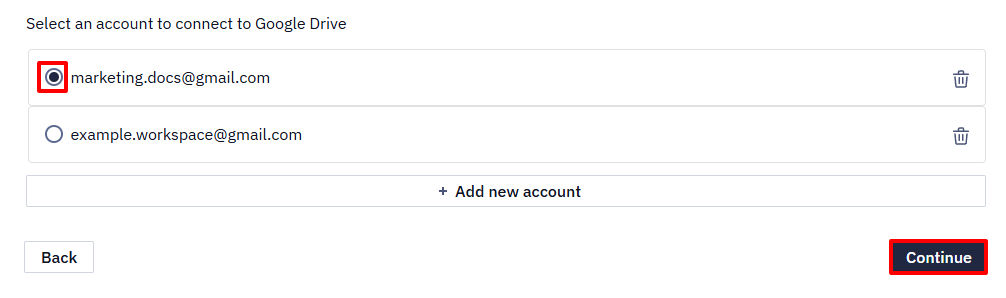
- Select an account.
- Select a Google Spreadsheet.
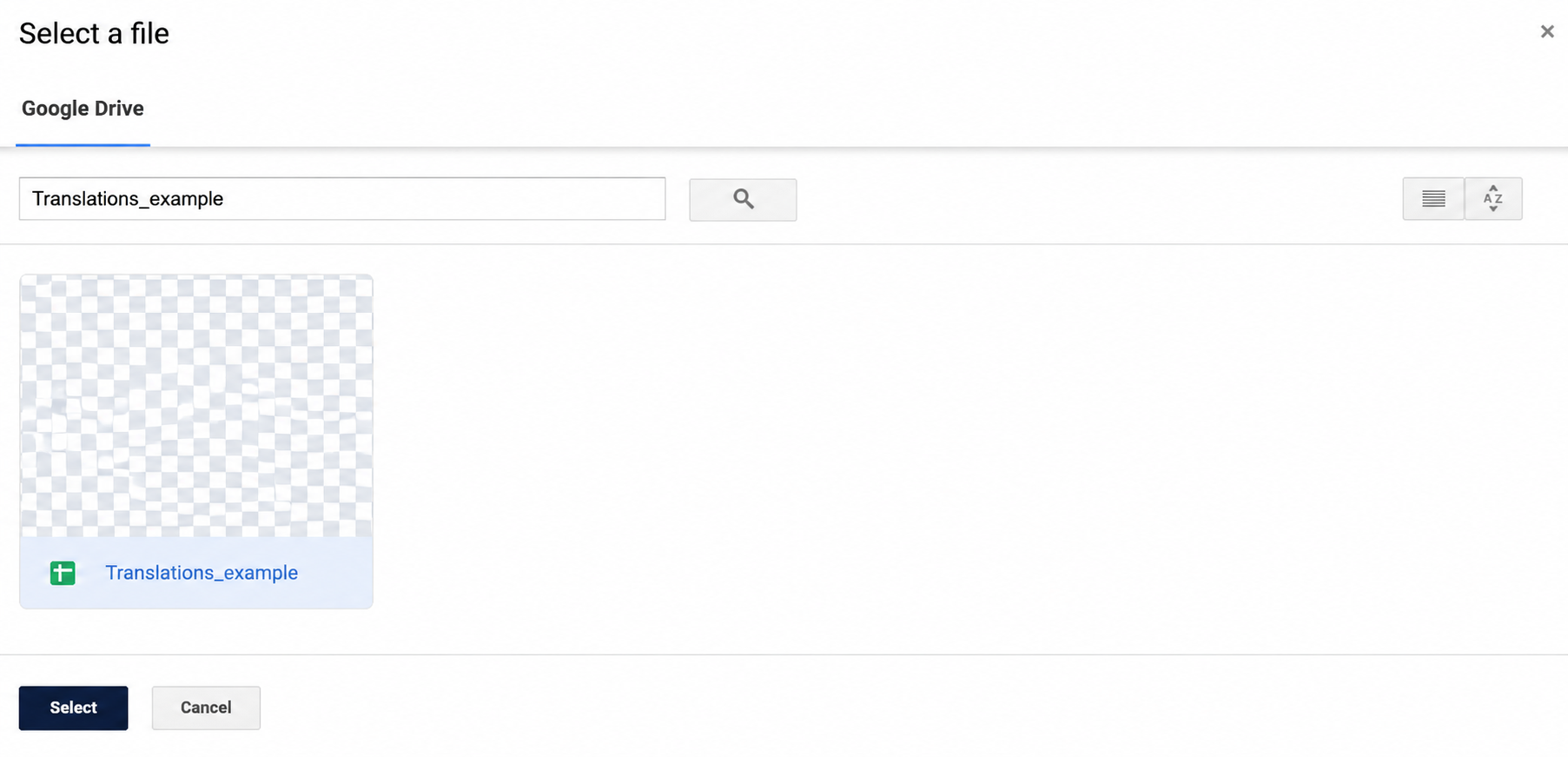
NoteFor files with multiple sheets, you can select the required sheet with translations.
- Select the sheet with translations and click Review.
Import from Computer
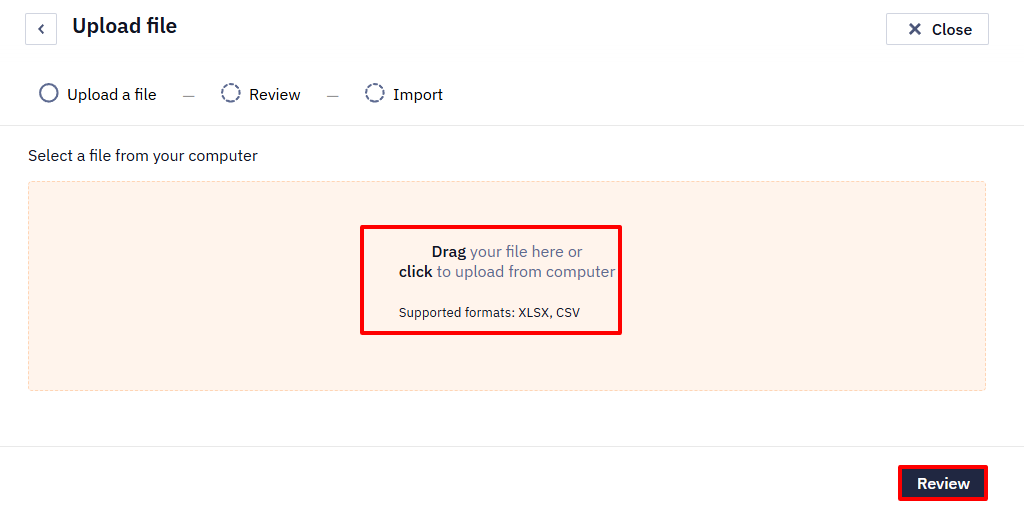
- Drag and drop the file into the upload area or click to select it from your computer.
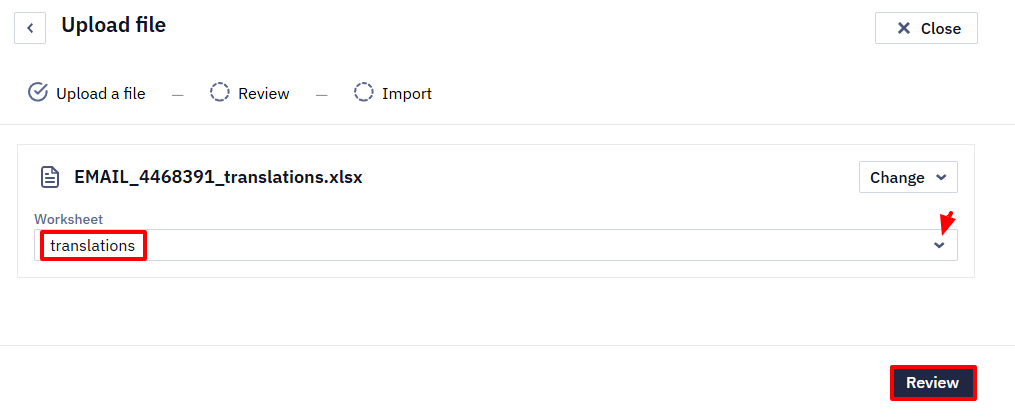
- Select the sheet with translations and click Review.
Complete Import
The system will validate the file and prepare the content for import.
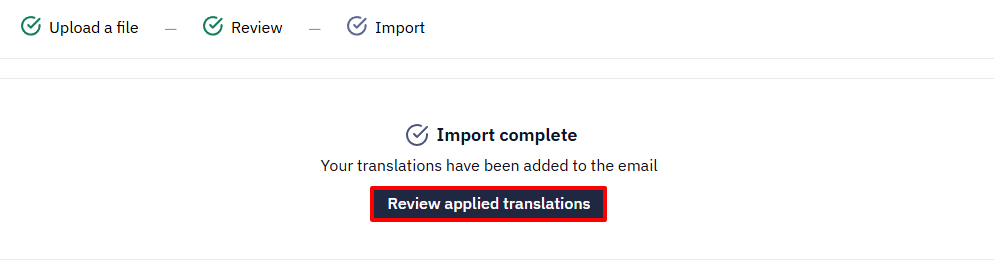
- Click Import.
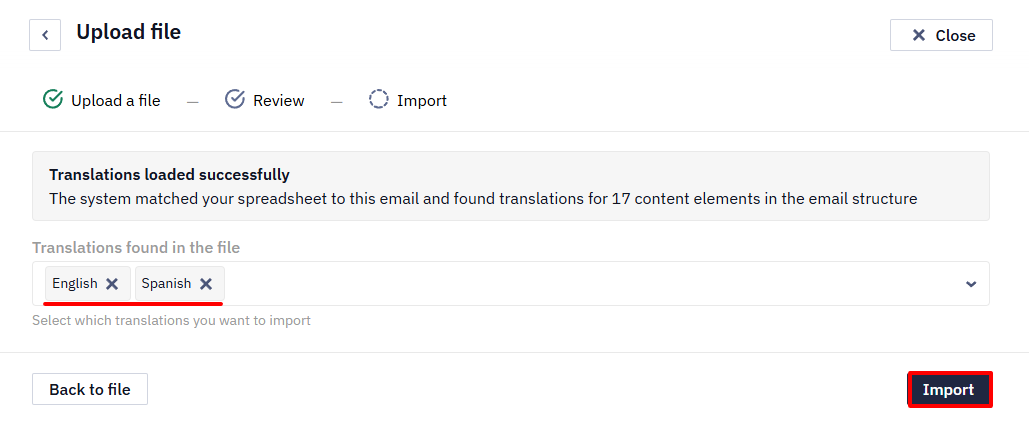
- Click Review applied translations and return to message editing.
View a Language Version
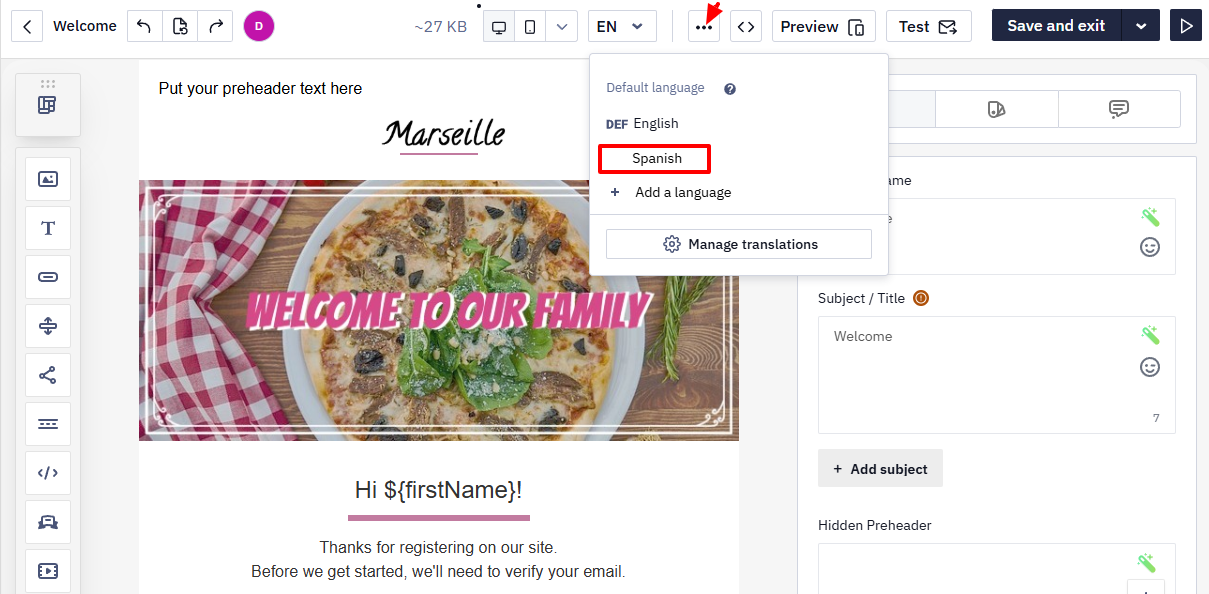
- In the message editor, click the language switcher.
- Select the required language version.
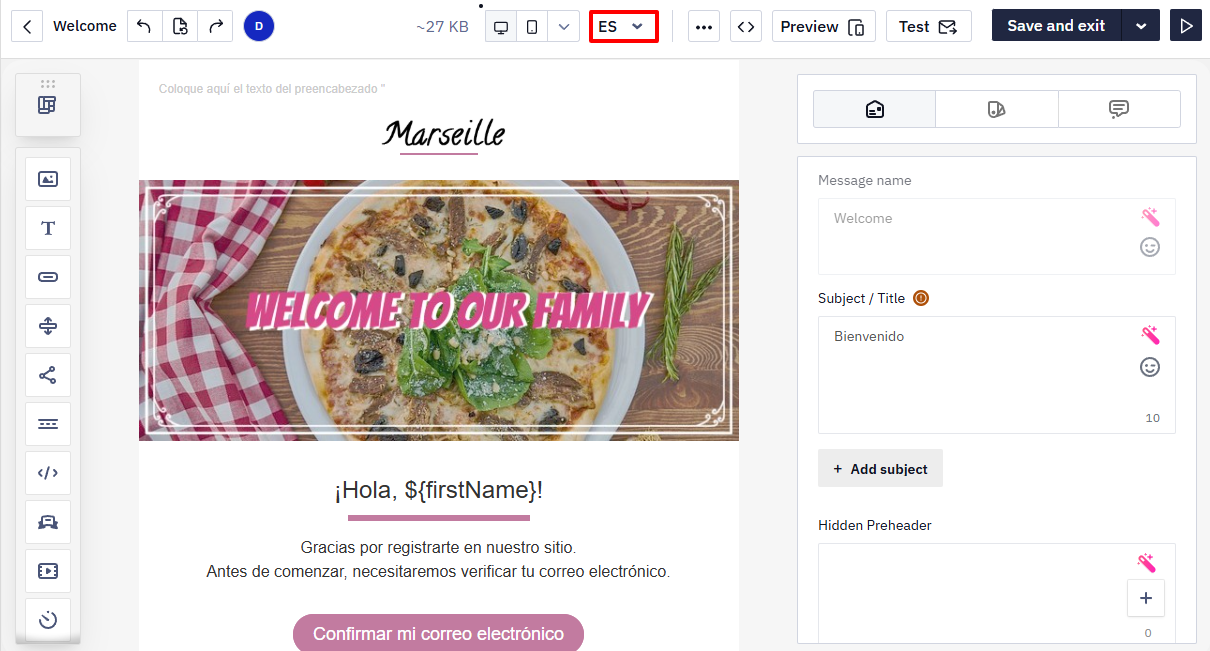
Imported translations will appear in the message.
There is no bulk export of message texts in the interface. To pull them out — for a translation agency, for example — use the API methods that return a message: Get email message, Get mobile push message and their counterparts for other channels. Pass langcode to get a particular language version.
To upload the translated text back into the message, use Add/update translated Email message and its counterparts for other channels. from is required there and isn't inherited from the base message: a request without it returns 400 From must be set. The value must be one of the account's registered senders, in the "Name" <address> format — any other value returns 400 interface … doesn't exist.
A message whose sender is a dynamic expression can still get a language version here: pass "template": true and leave from out — the localization is added to the existing message and no template is created. A base message with a dynamic sender, however, cannot be created through the API at all.
Updated 9 days ago